Invasive Species
Today, aquatic invasive plant and animal species continue to spread in the Northeast. There are two important lines of defense LSPA uses to prevent the spread of aquatic invasive species (AIS) into Lake Sunapee — the Lake Host Program and the Invasive Watch Program.
Why Are Invasive Species a Threat
Invasive species outcompete native aquatic species and alter aquatic food webs
Fewer native plants means less shelter, food and dissolved oxygen for aquatic life
Once established, invasive plants can spread rapidly, affecting boating and swimming.
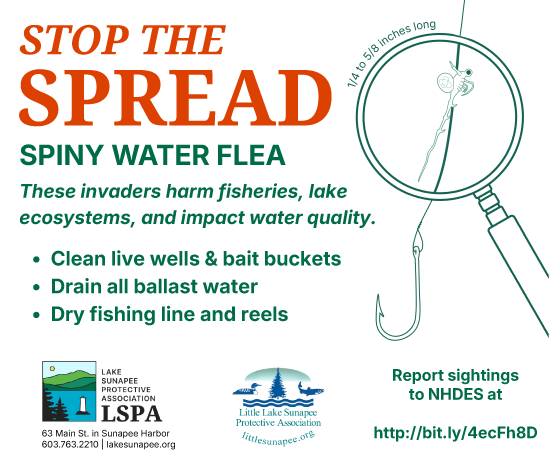
Click here to download a copy of LSPA’s informational card on aquatic invasive species.
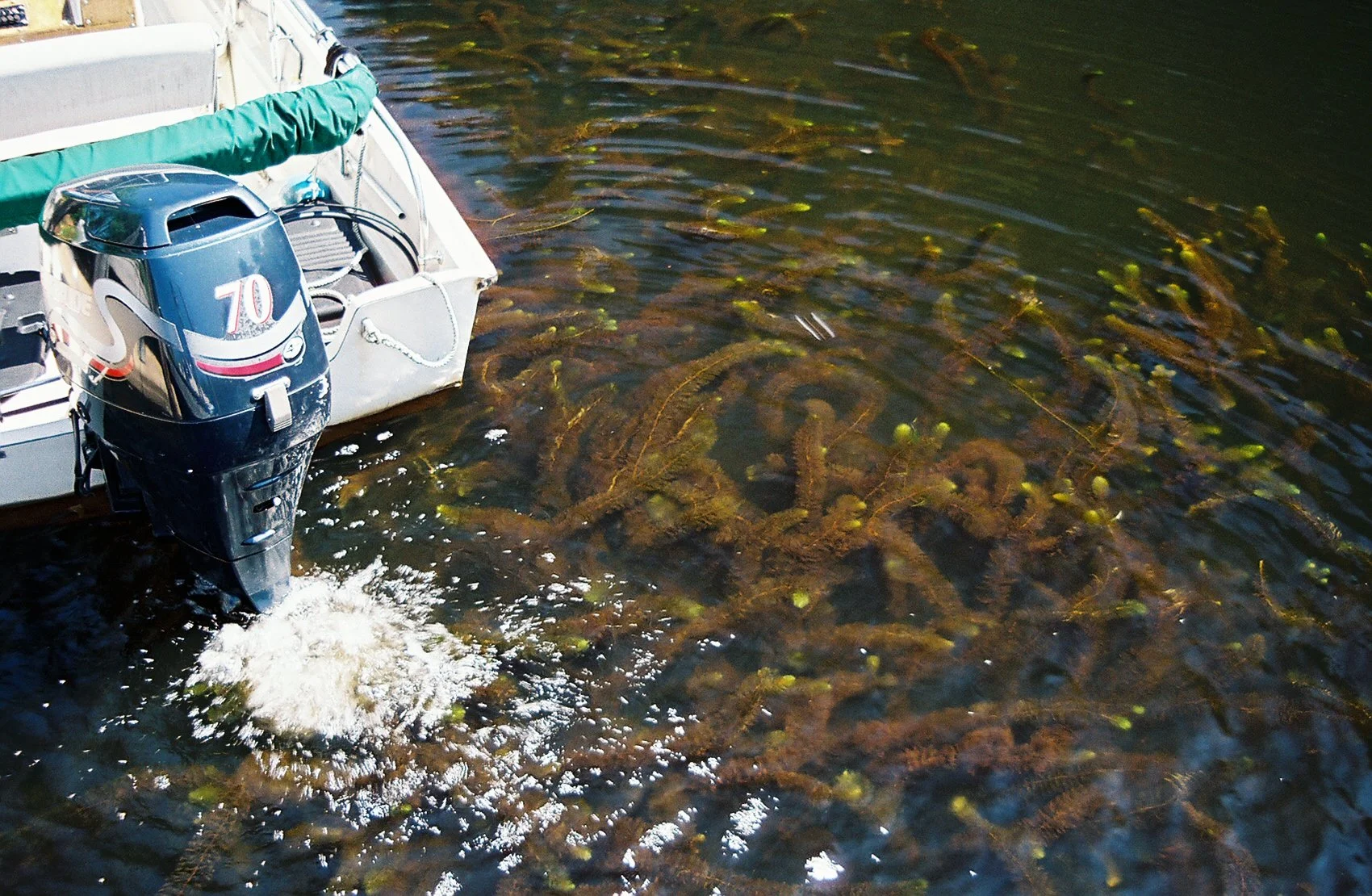
Photo: NHDES
If you think you have seen a possible aquatic invasive species in Lake Sunapee, please contact LSPA at 603-763-2210 or fill out this report form from NHDES.
Latest Threats in Our Watershed and Beyond
2026 Curly-leaf Pondweed Update

On June 4, 2026, we brought trained divers back to check the area by the Georges Mills boat ramp to look for signs of curly-leaf pondweed. Fortunately none were found! They also checked Otter Pond where they removed some invasive plants last summer and did not see any curly-leaf pondweed there either.
Invasive Watchers on both Lake Sunapee and Otter Pond will continue to be vigilant, surveying their shoreline areas, keeping an eye out for any aquatic invasive species. We cannot stress enough how early detection is key in our fight against these invaders
Click here to read more.
Spiny Water Flea Found in Newfound Lake
Spiny water flea (Bythotrephes longimanus), a type of crustacean, was discovered in Newfound Lake in September 2025 making it the 3rd waterbody in New Hampshire with this invasive species. It was found in Lake Winnipesaukee and Lake Winnisquam in 2023. Click here to download a fact sheet from NHDES.
Unfortunately, there is no known treatment so the best thing is to prevent it from entering a waterbody in the first place by cleaning, draining and drying boats, trailers and all gear.
Why the concern?
These small invaders can:
negatively affect the aquatic food web by changing the natural communities
outcompete native zooplankton species which in turn impacts the fish populations
foul fishing gear and anchor lines
increase a waterbody’s susceptibility to cyanobacteria blooms
Click here to read an article in the New Hampshire Bulletin.
To learn more about spiny water flea, visit this website from the Minnesota Aquatic Invasive Species Research Center.
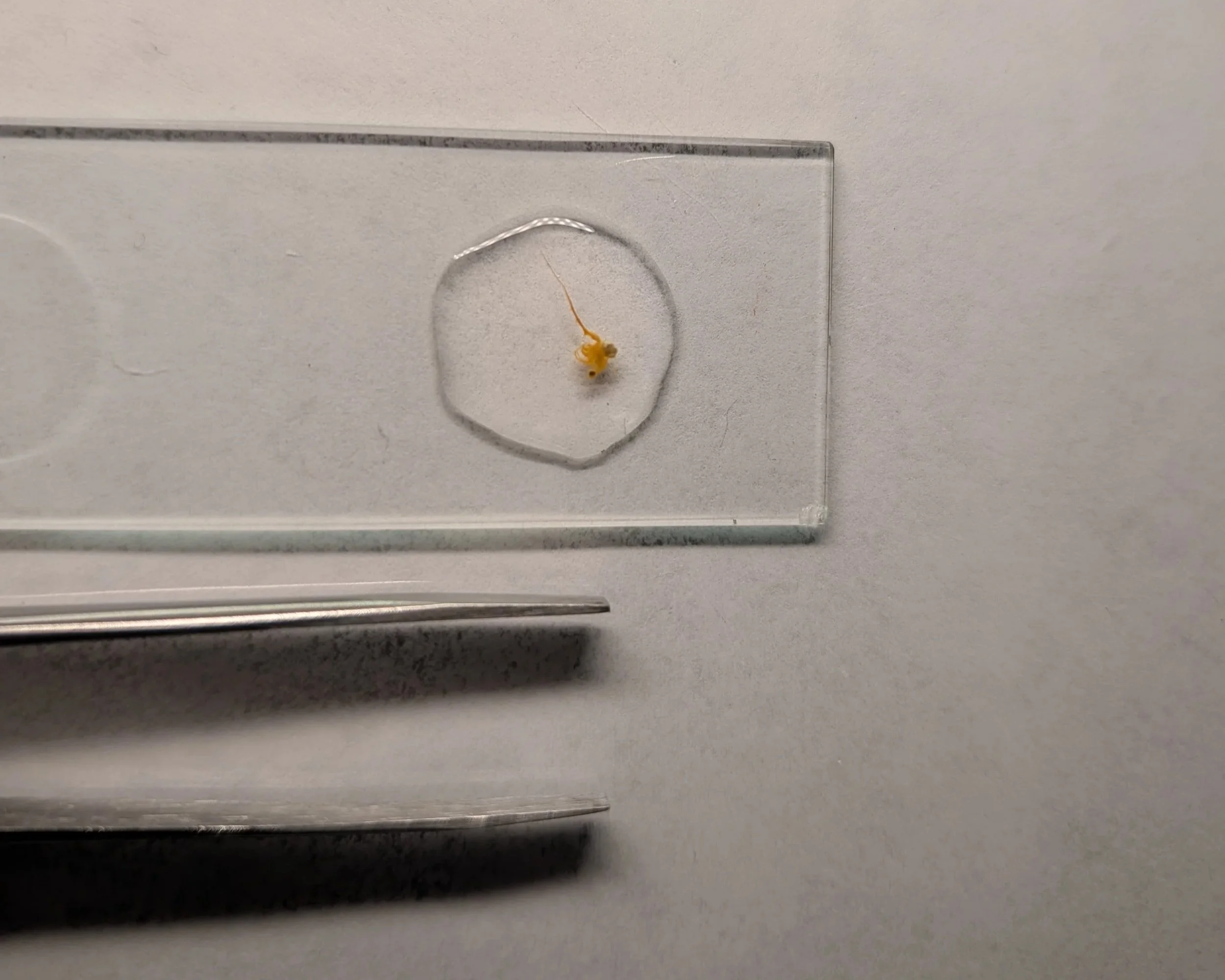
Photo: Newfound Lake Region Association
Help Stop the Spread!
LSPA is handing out free towels (see right) that anglers can use to wipe down their fishing line and other gear. Please help us spread the word! And, if you see any spiny water fleas on your line or gear, please report it right away to NHDES.
Click here to learn about invasive plants and animals or for more information visit our aquatic plant and animal resource page.